Branding Trends, Innovations & Industry Insights 2025

Six trends defined the branding conversation in 2024: AI-generated imagery, hyper-personalisation, immersive storytelling, minimalist identity, shape psychology, and brand loyalty campaigns. Two years on, we can tell you which ones held up under real client pressure - which we applied, which we pushed back on, and what the work actually taught us.
Looking Back From 2026: Which 2024 Trends Actually Mattered?
When this article was first published in 2024, the branding industry was in the middle of a significant inflection point. AI tools were proliferating faster than anyone could properly assess them. Personalisation was being declared a revolution every quarter. Minimalism was once again being hailed as the antidote to every bloated, inconsistent visual identity. From our studio in Shoreditch, working day-to-day with B2B clients across law, property, finance and healthcare, we watched these trends arrive with varying degrees of scepticism.
"The danger with a trends piece is that it makes every trend feel equally urgent," says Roland Glover, Strategy Director at Huddle Creative. "In practice, our clients don't have the bandwidth - or the brand foundations - to chase six trends simultaneously. Our job is to tell them which of these genuinely maps to their positioning, their audience, and their growth ambitions. And sometimes that means telling them to ignore the noise."
With two years of hindsight, we're in a position to be direct about which of these six trends we applied for clients, which we tested and moved on from, and which we'd argue were overhyped for the B2B context in which Huddle's clients primarily operate. We've added a Huddle's Verdict to each section below - our honest, practitioner-level assessment drawn from the work we've done since this piece was first written.
1. AI-Generated Imagery - Useful Tool or Race to the Bottom?
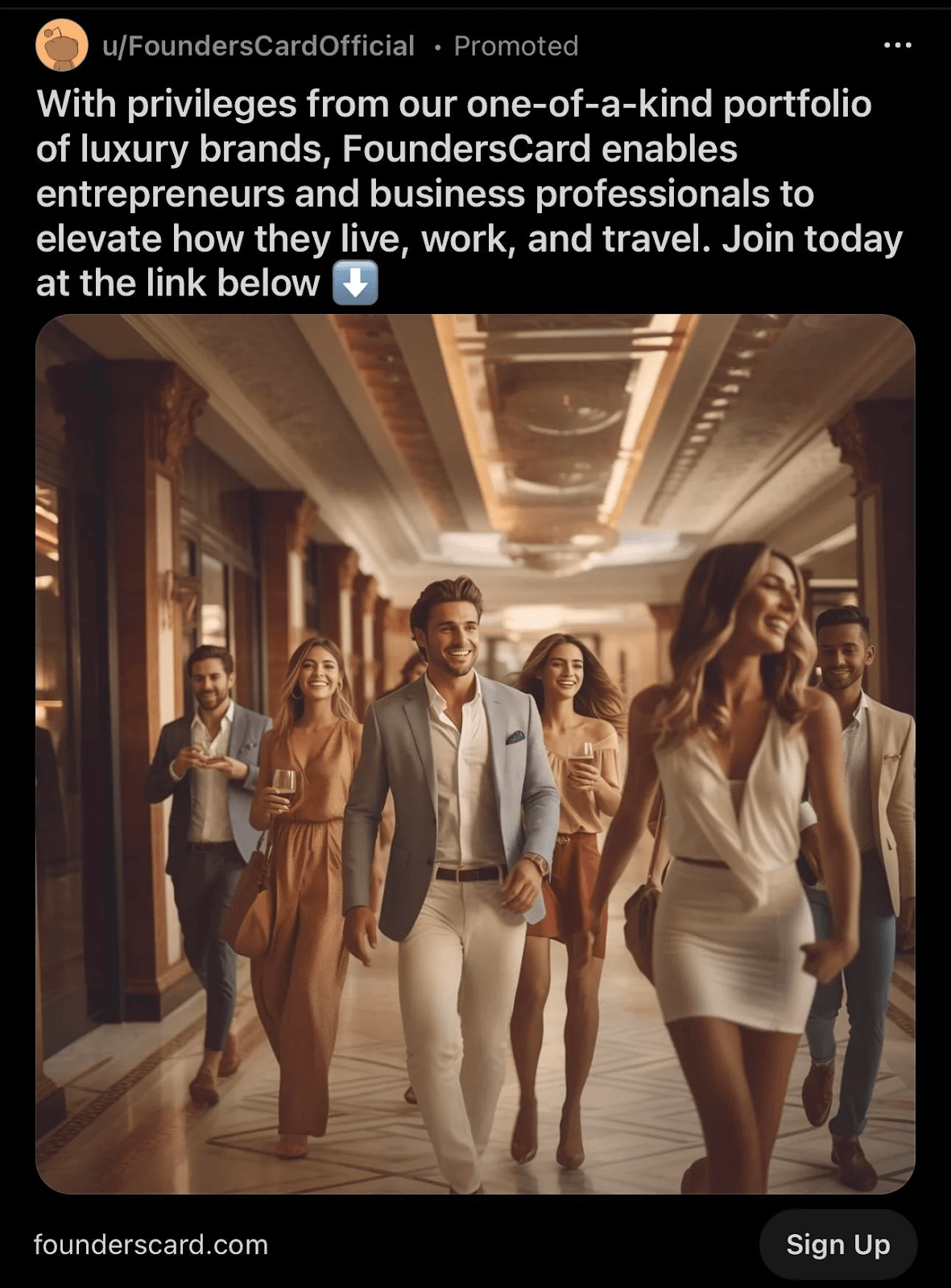
AI-generated brand imagery is no longer a novelty. Since 2024, the toolset has expanded dramatically - Midjourney, Adobe Firefly, DALL-E 3 and dozens of specialist platforms now give almost any in-house team the ability to generate brand-adjacent visuals in minutes. The question was never whether AI could generate imagery. The question has always been whether it could generate your imagery in a way your audience trusts.
Research by Getty Images found that 87% of survey respondents consider it important for an image to be authentic - that people do not want to feel "fooled or lied to" by the imagery brands use. That number has not fallen as AI tools have become more widespread. If anything, audiences have become more sophisticated at detecting AI-generated content and more sceptical of brands that deploy it carelessly. The authenticity premium is real, and it is growing.
Harvard Business School articulates the core tension well: "AI does not undermine the basic principles of design thinking, but it does profoundly change the practice of design." That distinction - between principles and practice - is the thing most brands get wrong. They use AI to skip the design thinking entirely, rather than to accelerate the execution of a clearly defined concept. The output looks like a brand. It just isn't one.
The best AI apps can streamline a rebranding process by providing advanced design capabilities, rapid iteration, and automating repetitive tasks. But the strategic direction - the decisions about who the brand is for, what it needs to communicate, and how it should be perceived - remains entirely human work. AI does not resolve positioning ambiguity. It amplifies whatever positioning clarity you already have.
Source: Terrible AI Ad, Reddit
Huddle's Verdict: Overhyped for B2B - with important caveats
In the B2B sectors Huddle works in - law, finance, property, healthcare - brand trust is not a differentiator. It is the foundation on which every client relationship is built. Authenticity is not a nice-to-have; it is existential. We have not seen AI-generated imagery strengthen a single B2B brand identity we have encountered. We have, however, seen it used effectively by our own creative team to accelerate mood-boarding, concept exploration, and rapid visual prototyping during the early, exploratory stages of a brand project - before human creative direction establishes the parameters within which execution happens. AI as a thinking aid: useful. AI as a shortcut past thinking: dangerous. Know the difference before you brief it into your brand process.
2. Hyper-Personalised Experiences - Real Value or Personalisation Theatre?
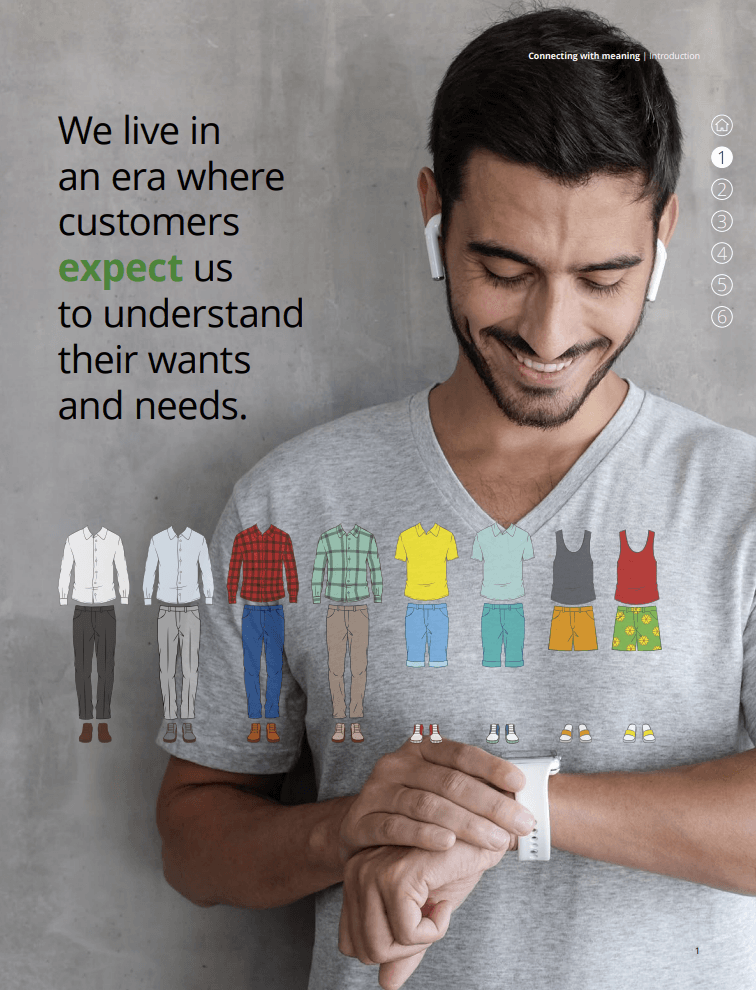
The concept is straightforward: use data, analytics, artificial intelligence, and automation to deliver highly contextualised messages to individual customers at the optimal moment, through the most effective channel. Research by Deloitte positions hyper-personalisation as the most advanced method for brands to customise their marketing - capable of maximising revenue, reducing costs, and elevating customer experience when deployed effectively.
The data on consumer expectation is compelling: when sharing personal data with businesses, 74% of people expect personalised experiences in return. The implicit contract is clear - data for relevance. Brands that fail to deliver on that contract don't just underperform; they actively erode trust.
Hyper-personalisation works by building tailored experiences through deep insight into customer behaviour, preferences, and needs - enabling highly relevant content and offers to reach each individual at the right moment. Companies can also use approaches like structured proposal analysis to identify key requirements and respond to clients in ways that demonstrate genuine understanding of their specific context. The technology to do this at scale now exists and is increasingly accessible.
But for most B2B brands, the foundational problem is not personalisation technology. It is that they do not yet have a clear, consistent brand identity for personalisation to express. Personalising from a vague brand position produces personalised vagueness. The technology amplifies whatever you put in - including the absence of a coherent message.
"We see a lot of B2B brands chasing personalisation capabilities before they've done the foundational brand work," says Roland Glover. "Personalisation is a delivery mechanism. If the message you're personalising is generic, the personalisation just makes the genericness more visible. You've spent significant budget telling the wrong story at exactly the right time to exactly the right person. That is not a win."
The right sequencing matters enormously. Hyper-personalisation creates genuine competitive advantage when it is built on a clear brand position - one that gives the delivery technology a coherent, differentiated message to express at scale. For the majority of B2B organisations Huddle has worked with, the correct sequence is: brand clarity first, personalisation capability second.
Huddle's Verdict: Relevant - but routinely mis-sequenced
Do not invest in personalisation infrastructure before you have resolved what your brand actually stands for and what it needs to communicate to whom. The two need to work in concert: brand strategy determines the message; personalisation delivers it with precision. One without the other is expensive noise.
Source: Deloitte
3. Immersive Brand Storytelling - The One Trend That Has Not Dated
Of all six trends covered in this article, immersive brand storytelling is the one we would push back hardest against anyone wanting to dismiss or defer. It is not a trend in the strict sense - it is a fundamental truth about how human beings process information, form attachments, and make decisions. The fact that it periodically becomes fashionable as a topic does not alter the underlying mechanism.
The literary and anthropological Significant Objects experiment remains one of the most striking demonstrations of narrative value in marketing. One hundred creative writers were enlisted to craft stories about items collectively worth $129, which were then sold on eBay to determine whether the stories increased the objects' perceived value. The result: a net profit of $3.6 million - a 2,700% increase in final sale price over the baseline value of the objects themselves. The mechanism is not mysterious. As Harvard Business Review explains, the human brain processes narrative differently from factual information - stories trigger deeper engagement, emotional memory encoding, and the transfer of meaning that turns goods into experiences and services into relationships.
At Huddle, immersive brand storytelling is not a trend we evaluate on a per-project basis. It is foundational to every engagement we take on. The question is never whether to tell a story - it is which story, for which audience, in which form, at which moment in the brand's development.
When we repositioned Charles Russell Speechlys - an international law firm with a five-year growth strategy that demanded a brand capable of matching its ambition - the centre of gravity of the entire project was storytelling. The positioning we developed, "meaningful relationships that create impact," gave the firm a coherent narrative frame that made sense of everything from their partner-led client approach to their cross-border practice areas. It resolved the tension between heritage and growth without leaning on either as a crutch.
Noni Garratt-Wall, their Head of Marketing, described the result as "a great balance of being different from competitors, but also realistic about who we are" - which is precisely what effective brand storytelling achieves. It tells the true story, compellingly.
A different version of the same principle applied when Huddle worked with Prescient, a global healthcare and biopharma consultancy navigating the aftermath of an acquisition. Their greatest competitive differentiator - an almost prescient capacity to anticipate market shifts before clients experienced them - had no coherent expression in their brand identity. The legacy brand communicated reliability. It did not communicate foresight. Huddle's work redefined "prescience" as Prescient's core superpower, built a global Brand Champions programme to embed the new identity internally, produced a launch film, and delivered a comprehensive Brand Book. The outcome positioned Prescient as a progressive sector leader with a strong foundation for international expansion - a brand story that matched the business reality for the first time.
Huddle's Verdict: Applied - and non-negotiable
This is not a trend to evaluate. It is the baseline of effective branding. If your brand is not telling an immersive, emotionally coherent story that your audiences genuinely connect with, the trends conversation is premature. Build the story first. Everything else - the technology, the personalisation, the visual identity - is the vehicle through which the story travels.

Powerful brand storytelling for Newcore Capital Management
4. Minimalist Brand Identity - Less Is More, But Only When Less Is Deliberate
The research on visual complexity and brand trust is unambiguous. Research by HotJar shows that 92% of people say cluttered layouts would cause them to switch to a competitor. An additional 84.6% of web designers identify cluttered website design as the single biggest mistake a brand can make. The case for restraint is not aesthetic - it is psychological. Simplicity reduces cognitive friction, builds trust, and creates space for a brand's actual message to register.
But minimalism done carelessly is not simplicity. It is emptiness. The discipline lies in removing everything that does not serve the brand's defined purpose - not in removing things because simplicity is currently fashionable. The distinction matters enormously in practice. A brand can be visually spare and strategically incoherent at the same time. Minimalism is not a substitute for brand thinking; it is an expression of it.
When Huddle worked with HawkinsBrown - the UK architectural practice with more than 300 staff - the challenge was not an absence of identity but a surfeit of inconsistency accumulated over a decade of growth. Their 2006 brand had been stretched across years of ad-hoc decisions: ten or more typefaces had accumulated across the organisation, multiple colour palettes coexisted without system logic, and there were no shared design templates to govern how the brand appeared in the world.
The visual identity did not reflect a firm that had grown, matured, and taken on increasingly complex projects. It reflected years of incremental decisions made without a governing framework.
The Huddle approach was rigorous reduction rather than wholesale reinvention. We consolidated the typeface system from ten or more down to three - each chosen to perform a specific role within the identity. We simplified the colour palette to a coherent, purposeful set. And we elevated the existing HawkinsBrown backslash - an element already present in the identity - as the hero graphic device, giving the brand a distinctive visual signature without introducing anything the organisation had not already claimed. The result was a cohesive, distinctive identity that felt like a confident, earned evolution of what HawkinsBrown already was.
"The brands that get minimalism right aren't the ones that throw everything away," says Roland Glover. "They're the ones that make courageous decisions about what stays. That requires a very clear point of view about what the brand stands for and how it needs to be perceived. Without that clarity, minimalism becomes a stylistic gesture rather than a strategic one. It looks cleaner. But it doesn't work harder."
Huddle's Verdict: Applied - but discipline is everything
Minimalism is not a shortcut. It is harder to achieve than complexity, because every element that remains must earn its place in a system that is doing more work with less material. If you are considering a minimalist rebrand, start with brand strategy - not design. Know precisely what you are keeping and why, before you decide what to remove. Brand identity professionals can then make those decisions count.

Aspen — minimalist brand identity example
5. Shape Psychology - Underused, Underrated, and Quietly Powerful
Shape psychology is not a new concept in design, but it remains one of the most consistently underused tools in B2B branding - in part because it operates below the level of conscious attention, and in part because it is frequently deprioritised when brand projects come under time or budget pressure. That deprioritisation is a mistake.
The research on how form influences perception is robust. Studies show that "compared to low-power consumers, high-power consumers respond more positively to angular as opposed to rounded shapes, because the angular shape facilitates the expression of competence as opposed to warmth." In B2B sectors - where target audiences are often senior decision-makers seeking signals of expertise, authority, and technical capability - the shape language of a brand identity is a strategic communication layer, not a decorative one.
Practitioners across disciplines - from graphic designers at Canva to interior design specialists - have documented how shapes impact viewer perception in consistent, predictable ways. The common associations that inform brand design work include the following.
- Squares and rectangles communicate structure, order, organisation, and trust - making them a frequent and well-justified choice in professional services, finance, and regulated industries.
- Circles and rounded shapes symbolise unity, warmth, harmony, and continuity - qualities that serve healthcare brands, people-centred organisations, and businesses where relationship is the primary product.
- Triangles suggest motion, energy, direction, and dynamism - effective for challenger brands and organisations that position around performance, innovation, or forward momentum.
- Natural shapes - trees, botanical forms, organic outlines - communicate sustainability, authenticity, and ethical values, and evoke feelings of safety and rootedness that resonate in healthcare, ethical finance, and mission-driven organisations.
At Huddle, we applied shape psychology directly and deliberately in our work with Aspen, a fintech startup that needed to signal both sophistication and disruption within an industry dominated by conservative visual conventions. The brief was to move Aspen from a generic positioning - one that could have described almost any early-stage fintech - to a brand that felt genuinely progressive and distinctive to its target audience of independent financial advisors.
The positioning Huddle developed - "(em)powering advisors" - established the brand's strategic intent with precision. The visual language built around it used angular graphic devices deliberately: sharp, directional forms chosen to communicate decisiveness, technical authority, and forward momentum. These were not aesthetic choices made in isolation.
They were strategic decisions informed by an understanding of how Aspen's specific audience - high-power professional decision-makers - would interpret angular versus rounded form-based signals, and by a clear view of how Aspen needed to be perceived as different from the established players in its market. Combined with a tonal green palette and a dual typeface system that balanced authority with approachability, the result was described as bringing "a breath of fresh air" into a traditional industry.
The angular choice was not decorative. It was a precise response to a positioning decision - the visual expression of a brand that needed to communicate competence and challenge simultaneously. That is what shape psychology, applied with strategic intent, actually looks like in practice.
Huddle's Verdict: Applied - and consistently underestimated
In our experience, shape psychology is among the first elements cut when brand projects come under time pressure, and among the things most missed when the resulting identity fails to communicate what the client intended. If you have not audited your brand's shape language recently - asking honestly whether your forms signal the qualities your audience needs to perceive - it is worth doing. Form communicates before content. Your audience is reading your shapes before they read your words.

6. Creative Brand Loyalty Campaigns - A B2C Mechanic That B2B Must Translate
The data on brand loyalty programmes is compelling at the consumer level. Research from HubSpot shows that around 60% of shoppers actively seek discounts when joining a loyalty programme, and approximately 33% of consumers now anticipate earning points and rewards. Well-designed loyalty campaigns, communicated effectively at every brand touchpoint, convert satisfied customers into active advocates - and in competitive markets, advocates are worth more than any single transaction they represent.
People are willing to go the extra mile for brands they genuinely love. The expectation in the modern digital landscape is that effort and loyalty will be recognised and rewarded - through discounts, exclusive access, or early product availability. Staying informed about emerging customer loyalty trends can help brands identify which reward mechanics resonate most with their specific audience and refine their touchpoints accordingly.
For B2B organisations, however, the direct application of consumer loyalty mechanics is more complicated than it might initially appear. B2B loyalty does not live in points programmes or early-access discounts. It lives in demonstrated expertise, consistent delivery, the depth of relationships built over time, and the confidence that comes from working with a brand that understands your sector, your pressures, and your ambitions at an intimate level.
The most effective B2B analogue to a loyalty campaign is a brand that gives clients genuine reasons to stay - not through reward mechanics, but through a distinctive, consistently delivered proposition that competitors cannot easily replicate. That proposition originates in brand strategy. It is expressed through every interaction, every piece of communications, and every piece of work delivered.
It is reinforced through thought leadership and case studies - the mechanisms through which B2B brands demonstrate ongoing value and expertise to both existing and prospective clients.
With storytelling a crucial element of building brand loyalty in B2B as much as in consumer markets, the brand narrative and the loyalty strategy need to work in concert. A brand that tells a compelling story consistently - one that makes clients feel understood and well-served - does not need a points programme. It needs to keep delivering on the promise the brand makes.
Huddle's Verdict: Watch - and translate carefully
The loyalty mechanics that work in B2C do not transfer directly to B2B, but the underlying principle applies in both markets: clients and customers stay with brands that consistently demonstrate value and genuine understanding. For B2B organisations, that means investing in brand storytelling, thought leadership content, and case study programmes - the mechanisms through which B2B loyalty is built and sustained. If you want to act on this trend, start there before considering reward infrastructure.

How To Build Customer Loyalty, HubSpot
Your Updated Brand Insights: Six Trends, Honest Verdicts
AI-Generated Imagery: Use AI to accelerate the design process - mood-boarding, concept exploration, rapid visual prototyping - but do not use it as a substitute for strategic creative direction. In B2B markets where trust is foundational, authenticity is non-negotiable. Apply AI as a thinking aid, not a thinking replacement.
Hyper-Personalised Experiences: The technology is real and the consumer expectation is real. But the sequencing matters. Establish brand clarity - a clear, differentiated position and message - before investing in personalisation infrastructure. Personalising from a vague brand position produces personalised vagueness.
Immersive Storytelling: This is not a trend. It is the mechanism through which brands create meaning, build emotional connection, and earn the loyalty that sustains growth. Apply it to every communication, at every touchpoint, at every stage of the client journey. It is not a campaign tactic - it is a brand discipline.
Minimalist Brand Identity: Restraint is powerful when it is purposeful. Audit your current identity honestly - ask which elements are earning their place and which have accumulated by default. Then make the courageous decisions about what stays. Start with brand strategy, not design.
Shape Psychology: If you have not deliberately considered what your brand's shape language communicates to your specific audience, you are leaving a powerful and free communication layer on the table. Angular forms signal competence and authority. Rounded forms signal warmth and community. Natural forms signal authenticity and sustainability. Make the choice deliberately.
Creative Brand Loyalty Campaigns: In B2B, loyalty is built through demonstrated expertise and consistent delivery, not reward mechanics. Invest in the brand storytelling, case study programme, and thought leadership content that shows existing and prospective clients - repeatedly and specifically - what working with you delivers.
What Two Years of Practice Teaches You About Branding Trends
The consistent lesson from the work Huddle has done since 2024 is that trends are most useful as diagnostic tools, not as prescription lists. The right question is not "are we doing this trend?" - it is "does this trend address a specific, identified problem our brand has, and do we have the brand foundations in place to deploy it effectively?"
Of the six trends covered in this article, two - immersive storytelling and shape psychology - have proven consistently relevant and consistently underinvested in by the B2B brands we encounter. One - minimalist identity - is genuinely valuable but routinely misapplied. Two - AI-generated imagery and hyper-personalisation - are tools that amplify whatever brand foundations you already have; if those foundations are weak, the technology will not compensate. And one - brand loyalty campaigns - requires translation before it is applicable to most B2B contexts.
"The brands we have seen perform most strongly over the past two years aren't the ones that chased the most trends," says Roland Glover. "They're the ones that got very clear about what they stand for, built a visual and narrative identity that expresses that with consistency, and then deployed specific tools - including some of the ones in this article - in service of a coherent brand strategy. Clarity first. Execution second. In that order, every time."
That sequence - clarity before execution - is the throughline of every successful brand project Huddle has completed across fifteen-plus years of work in professional services, finance, property, and healthcare. It is what separates brands that move with genuine purpose from brands that drift with every trend cycle, spending time and budget without building anything that lasts.
How Does Your Brand Score Against These Trends?
If this article has prompted questions about where your brand currently sits - whether your visual identity is working as hard as it could, whether your storytelling is genuinely immersive, whether your brand's shape language is communicating what you intend, or whether your brand has the clarity it needs before you invest in personalisation - Huddle's Blandscape™ audit is designed to give you an honest, specific answer.
The Blandscape™ is a free brand scorecard that assesses your brand across ten dimensions: positioning, unique value proposition, storytelling, visual identity, tone of voice, employer brand, content, website UX, case studies and social proof, and trust and credibility. It is not a generic questionnaire. It is a structured assessment built on fifteen-plus years of B2B brand practice, designed to identify where your brand is performing, where it is vulnerable, and where the most valuable work lies. You will receive a personalised PDF scorecard within one working week.
Take the Blandscape™ audit at huddlecreative.com/the-blandscape. No obligation. No generic feedback. A real assessment of your brand from the people who do this work every day.
Ready to Act on What You Find?
Whether you are working through a rebrand, navigating a brand consistency challenge after a period of growth, or building a brand identity for the first time, Huddle's team of strategists, creatives, and brand specialists has been doing this work with B2B clients across law, finance, property, and healthcare since 2009. You can see our work for yourself today.
Blandscape™ audit is the right place to start - or brief us today if you are ready to begin