Voice Search For Brands: 35 Statistics & Trends

Voice queries and Voice Search have revolutionised the way consumers interact with brands, and it's no surprise that the latest numbers show just how fast this tech took off. With millions of voice-enabled devices and assistants littering the globe, tools like Google Voice Search, Siri, and now even live AI chat tools like Gemini Live, have suddenly become the go-to way of finding that new local business, or sorting out some voice commerce sales; and that's just the tip of the iceberg.
Getting on board with Voice Search tech gives brands a fresh way to connect with customers who are just itching to tell their smart devices to do stuff for them, which is basically a lot easier and more convenient than swiping away at their smartphone screens all day long. And trust us - it can seriously improve the user experience, make your brand more accessible, and even get your smartphone users and target audiences more engaged than ever.
This article is going to dive deep into the key stats and trends that are changing voice search in 2025 and 2026 and give you some real insight into how brands can get in on the voice search optimisation game before it leaves them in the dust.
What is Voice Search For Brands?
Voice search for brands refers to the technology that allows users to talk to and search via their voice on their devices, like Alexa, Google Assistant or even Siri. With all the smart speaker users out there, it's no surprise that people are getting more and more used to using spoken voice searches to find whatever it is they are after - be it a product, a service, or some info that's floating around the internet.
Brands have to rethink their digital marketing plans, and that means shifting the focus over to those long tail keywords we all love to hate, using natural language so people can easily ask for what they want, and, of course, making sure SEO is still up to par. And don't forget, all those fancy featured snippets and mobile devices, they all play a part in getting voice search rankings just right, especially when you factor in where the user is looking for things, i.e. location based searches.
To make your content voice search friendly though, you need to make sure the message, the personality of your brand and the key things you're trying to get across are all coming across clearly on any platform you use.
Brand and Voice Cohesion
Maintaining a consistent brand identity across emerging channels like voice search is an essential innovation for brands looking to build trust and recognition with their audience. As voice search continues to grow as a key digital touchpoint, ensuring the brand’s voice, tone, and messaging are adapted to voice queries for voice search rankings strengthens the overall customer experience.
For example, when a customer asks for information via voice assistant, the response should reflect the same brand personality they encounter on the website, social media, or physical stores. This also improves voice search marketing effectiveness, making the brand more memorable through consistent voice search success.
Brand guidelines and brand strategy services play a critical role in achieving this consistency. By clearly defining voice, tone, and messaging, these guidelines ensure that any content created for voice search queries stays true to the brand’s core values and positioning.
35 Voice Search Statistics 2025
Here are 35 of the latest voice search statistics for 2025.
Data from Demand Sage:
- As of 2025, around 20.5% of people worldwide actively use voice search, That’s nearly 1 in 5 individuals, and this figure is on a steady climb.
- Around 8.4 billion voice assistants are expected to be in use globally.
- The average voice search result is 29 words in length.
- 90% of people believe that voice search is easier than searching online.
- Voice search results tend to load 52% faster than the average search results.
- Voice search assistants answer 93.7% of search queries on average.
- More than 1 billion voice searches take place every month.
- More than 50% of the adults reported that they use voice search daily.
- 27% of people use voice search on mobile.
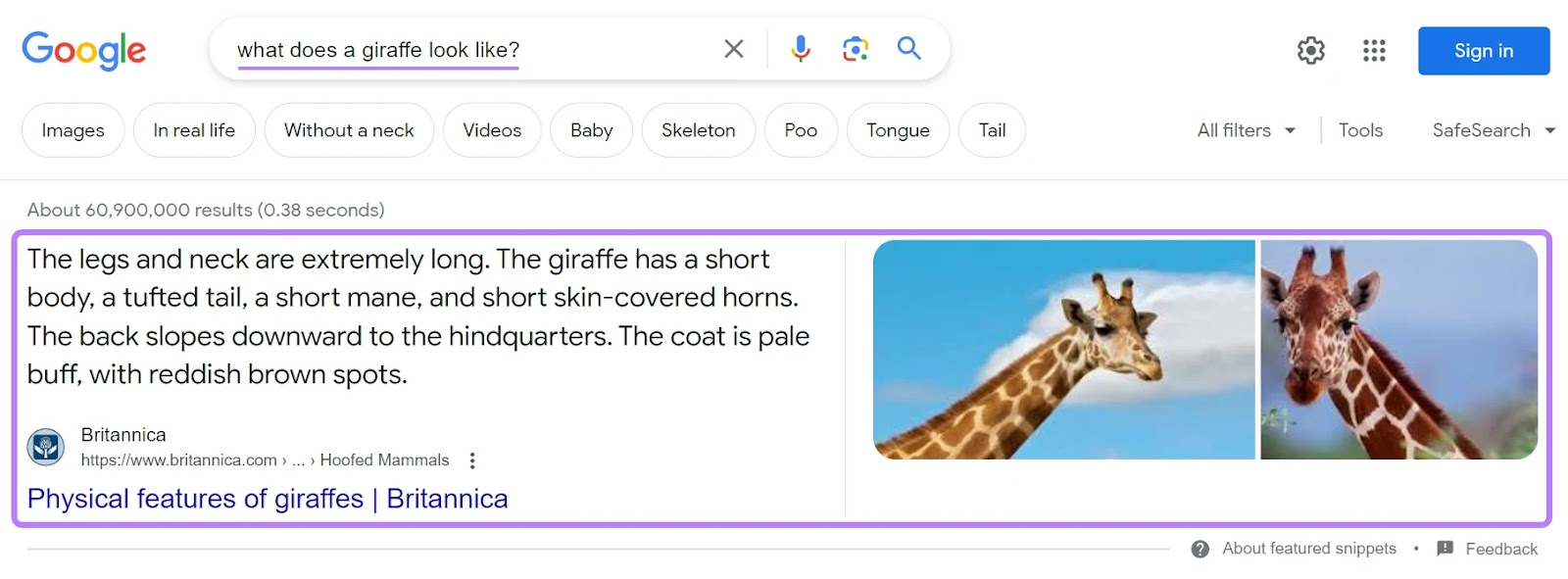
- More than 40% of the voice search results are from the featured snippets.
- An average voice search SERP requires 4.6 seconds to load.
- More than 20% of the searches in the Google App are done using voice search.
- Voice search is used by approximately 58% of consumers to find a local business.
- More than 30,000 smart home devices are supported by Google Assistant.
- 45.1% of the voice assistants reported that they prefer Apple’s Siri for voice search.
- Voice search shopping is expected to cross $40 billion.
Data from Data Reportal:
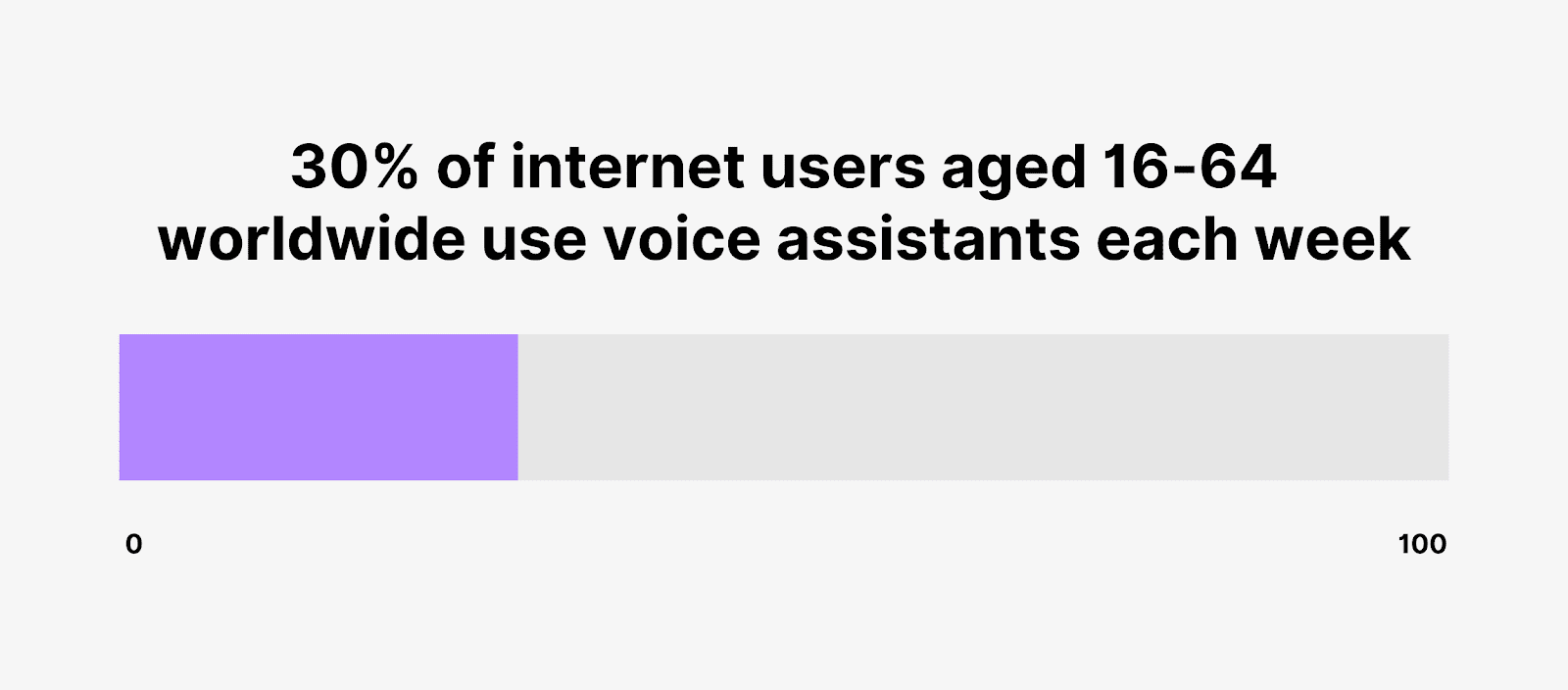
- Around 30% of internet users aged 16-64 worldwide use voice assistants each week.
- In the UK, 29.2% of internet users aged 16-64 use voice assistants each week.
- 39.3% of Chinese internet users use voice assistants each week, making China's voice search usage higher than every surveyed country included in the data.
- On average, more men than women use voice assistants at least once per week.some text
- 31.4% of male internet users aged 16-24 use voice assistants each week, compared to only 29.9% of female internet users aged 16-24.
- 32.1% of female internet users aged 25-30 use voice assistants each week, compared to only 31.7% of male internet users aged 25-34.
- 31.8% of male internet users aged 35-44 use voice assistants each week, compared to only 31.2% of female internet users aged 35-44.
- 27.3% of male internet users aged 45-54 use voice assistants each week, compared to only 26.8% of female internet users aged 45-54.
- 23.5% of female internet users aged 55-64 use voice assistants each week, compared to only 23% of male internet users aged 55-64.
- As of 2023, 19-20% of internet users worldwide use voice assistants specifically to find information each week.some text
- In the UK, that number rises to 22.1% of internet users using voice assistants specifically to find information each week.
- In places like the US and India, the number rises even further to around 25% of internet users using voice assistants specifically to find information each week.
(Image source: Backlinko)
Data from Vixen Labs:
- 28% of US and UK consumers report using voice assistants daily.
- 61.9% of US and UK Millennials use voice assistants every month on any device, but primarily on smartphones.
- 55.2% of Gen Z use voice assistants every month and 51.9% of Gen X use voice assistants every month.
- Only 31.5% of Baby boomers in the US claim to use voice assistants.
Data from Edison Research:
- 34% of the population age 12+ report owning a smart speaker.
- Nearly half of smart speaker owners (43%) own three or more of the devices.
4 Voice Search Trends in 2025
Based on the statistical data above, here are four key trends for brands to consider this year.
1: Daily Voice Search Users
One key trend is the growing prevalence of daily voice search usage. Over 50% of adults now report using voice search every day, driven largely by the convenience of hands-free technology. This is especially significant in the mobile sector, where 27% of people now rely on voice search for quick, on-the-go queries.
Brands that optimise their digital presence for voice search can tap into this constantly growing audience, particularly by ensuring that their content aligns with the featured snippets—a source for more than 40% of voice search results.
Featured snippet example, SEMRush
2: Voice-Enabled Commerce
The convenience of voice search is also changing how consumers shop. Voice search shopping is expected to surpass $40 billion in the coming years, signalling a shift towards hands-free commerce.
For brands, this trend highlights the importance of optimising eCommerce platforms to accommodate voice commands through smart speakers. By providing seamless voice-activated purchasing experiences, brands can position themselves at the forefront of the next wave of consumer behaviour.
3: Local Business and Voice Search
Voice search is transforming local business visibility as well, with 58% of consumers now using voice assistants to find nearby services and stores. This makes voice optimization crucial for businesses that rely on local foot traffic.
Ensuring business listings are accurate, up-to-date, and optimised for local SEO will be key in helping brands rank in these voice searches and attract customers.
4: User Demographics and Global Trends
Interestingly, the use of voice assistants varies across demographics and regions. Globally, around 30% of internet users aged 16-64 use voice assistants weekly.
In the UK, this number rises slightly to 29.2%, while in countries like China, voice assistant usage soars to 39.3%. Brands looking to expand internationally should take note of these regional differences and consider localising their voice search strategies accordingly.
Younger generations, especially Millennials, are driving the bulk of voice assistant usage, with 61.9% of Millennials in the US and UK using voice search monthly. This trend emphasises the importance of catering to this tech-savvy demographic with voice-optimised experiences across devices, particularly smartphones.
The Future Of Voice Search
Voice search queries tend to mirror how people naturally speak, shifting away from traditional text searches and towards conversational phrases that are more intuitive for users. As consumers search using voice interaction and voice activated speakers, brands must evolve their SEO strategy to ensure relevant answers are delivered for each user query. Aligning your content around specific primary keywords remains a foundational step to bridge the gap between spoken questions and accurate search engine results.
Voice activated features are now standard in voice activated devices like smartphones, smart speakers, and virtual assistants, making it easier than ever for users to find local business information and access an online store with just a spoken command. The key factors driving this trend include the rise of local listings, user intent shaping results, and the speed at which marketing efforts can reach audiences via voice interaction.
Brands must focus on understanding how consumers search using voice, optimising for user queries that are spoken rather than typed, and ensuring their local business information is accurate across all platforms.
As virtual assistants become more advanced, the need to anticipate user intent and adapt marketing efforts for voice activated devices will only grow. Ensuring your AI virtual assistant is configured to understand natural language variations can improve response accuracy and user satisfaction.
Ultimately, the future of voice search lies in delivering seamless, natural interactions helping people find local business information and online store options using conversational phrases and instant voice interaction. Businesses that prioritise these key factors will stand out as voice activated features become an essential part of every successful SEO strategy.
Closing Thoughts
By now, it's pretty clear that voice search isn't just some trendy new thing, it's already a crucial part of how consumers interact with brands, and it's going to get even more important as the years go on. If brands are smart, they'll make sure they're keeping up with voice search optimisation and making sure their brand is consistently coming up across all the various platforms - that way, they'll be top of mind where it’s really needed.
So, are you ready to give your brand a voice search strategy that really packs a punch? Why not check out Huddle’s expert branding services to ensure your business stands out across all digital touchpoints?
Brief us today to get started!
Brand Voice Search FAQs
Is voice search on the up and up?
Yes, voice search is on the rise, with 4.2 billion voice assistants out there and reaching up to 8.4 billion at the end of 2025.
What gets the most use out of voice search?
The most common use of voice search is to find nearby businesses - with 58% of consumers just using voice to help them find where they need to go.
Is voice search going to replace classic SEO?
Voice search has changed the way we think about SEO from now on, with 40% of voice search results coming from featured snippets and brands having to focus more on faster, answer driven content.